
Copal and Che
A morning in Antigua's Garden of Eden

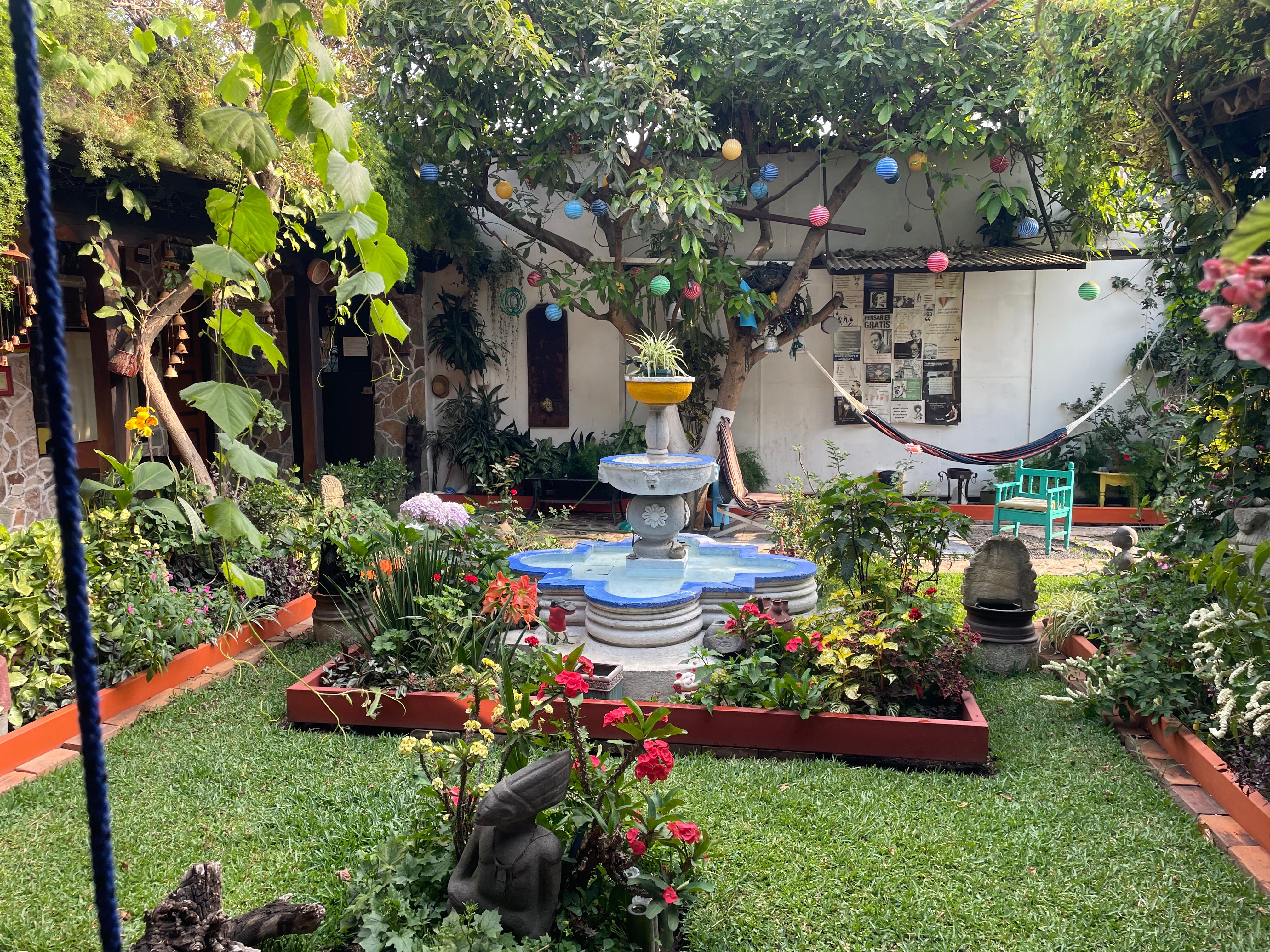
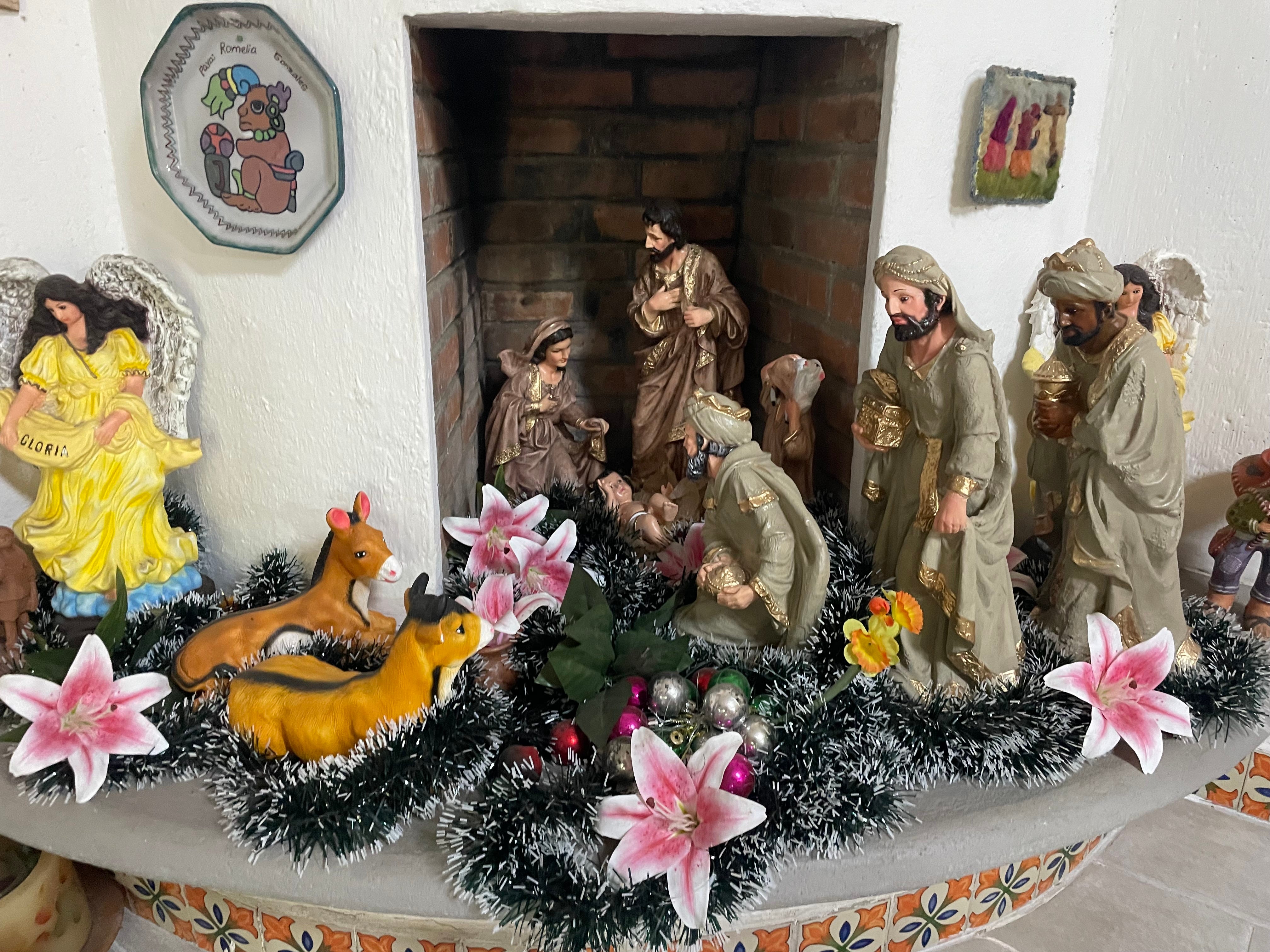
I woke up this morning in the Antigua Garden of Eden, intrigued, curious and confused. This private residence on the outskirts of town, listed on AirBnB, is decked with revolutionary zeal around its walls, and in the kitchen corner, filling the old unused fireplace, a full nativity scene: smiling kings and shepherds gazing into the baby Jesus’ eyes, whilst wooden owls and other otherworldly, pre-Christian figurines and totems look upon us from the higher shelves.
The first face I encountered on arrival was Che Guevara, framed at the door with the words:
“Let me say, at the risk of seeming ridiculous, that the true revolutionary is guided by great feelings of love.”
Christ would certainly agree with that sentiment.
Our bedroom has multiple framed photos, old and faded, of what looks like indigenous community leaders out in the field, attending small fire ceremonies. The kitchen declares the resistance of the K’iche’ Maya who fled to the mountains during the civil war and found their only brief solace in the moments they could practice their traditional weaving.
There is an extensive library of books about the folklore, culture and history of the Maya and their wider struggle. It’s a library that has me wishing I was spending several weeks here and not just two nights.
Beyond me now, towards the city of Antigua, I can hear the triumphant horns and drums of a marching band - marching for whom, and marching towards where? Antigua is beautiful, tourist-strewn, hedonistic, stuffy and Colonial. It is soaked in old money and gated communities. I arrived once to find the entire centre sealed off to accommodate the wedding of the daughter of an important dignitary.
I have yet to meet the owner of the Antigua Garden of Eden, yet I am intrigued by their home - this interplay of the religious and the indigenous. To call it the Garden of Eden is bold and unmistakeable. And yes, the garden, small though it is, is beautiful and well-tended. At its centre is a water fountain, though not currently issuing water. There are butterflies flittering amongst the yellow canna flowers, and an earthen statue of a jaguar, and small standing stones.
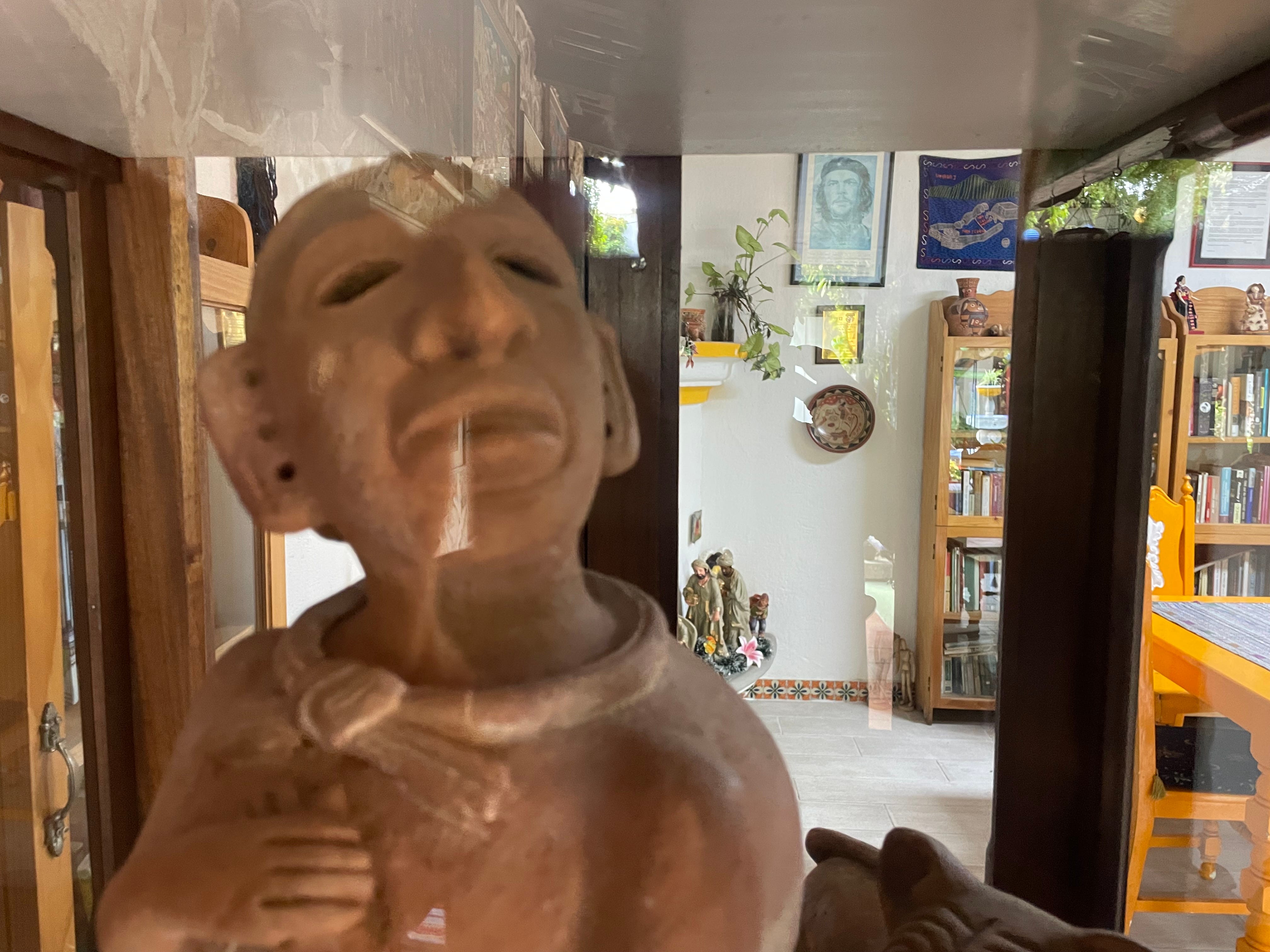
This place is a microcosm of a tension that has been unfolding across Guatemala for five centuries. When the Spanish arrived in the sixteenth century, they came not only with swords but with the Catholic faith. For the indigenous peoples, embracing Catholic forms was often a matter of survival so they began incorporating elements of Christianity into their traditional beliefs. The K’iche’ Maya, the people most associated with this highland region around Antigua, were among the most tenacious in preserving what they could. In many places, traditional religious functionaries continued to operate within Catholic brotherhoods - the cofradías - organisations which played a crucial role in the preservation of pre-Spanish religious traditions. The jaguar figurine in this garden, the fire ceremony photographs on the bedroom wall, the wooden totems watching over the nativity are all representations of this ancient cosmology, ever finding a way to breathe inside and alongside the colonial faith. Modern Maya spiritual practices, known as costumbre, still take place across the highlands, and many who identify as Catholic or Prodastant hold simultaneous allegiance to older ceremonial traditions.
This place is a microcosm of the great mystery and intriguing interplay that is Mayan old ways and their long, complex accommodation of outside religious influence.
We popped out of town towards San Juan de Obispo and instantly felt lighter, as though we’d taken off a heavy colonial coat and could feel ourselves closer to the earth again. They venerate the nispero tree and fruit there - a small yellow fruit, native and very common in this area. We asked the proprietor of Vinos Lobos, who make a wine from the nispero, why it is so beloved here. Her reply was possibly informed by a day spent in the company of too many tourist questions: “Because we have so many here,” she said.
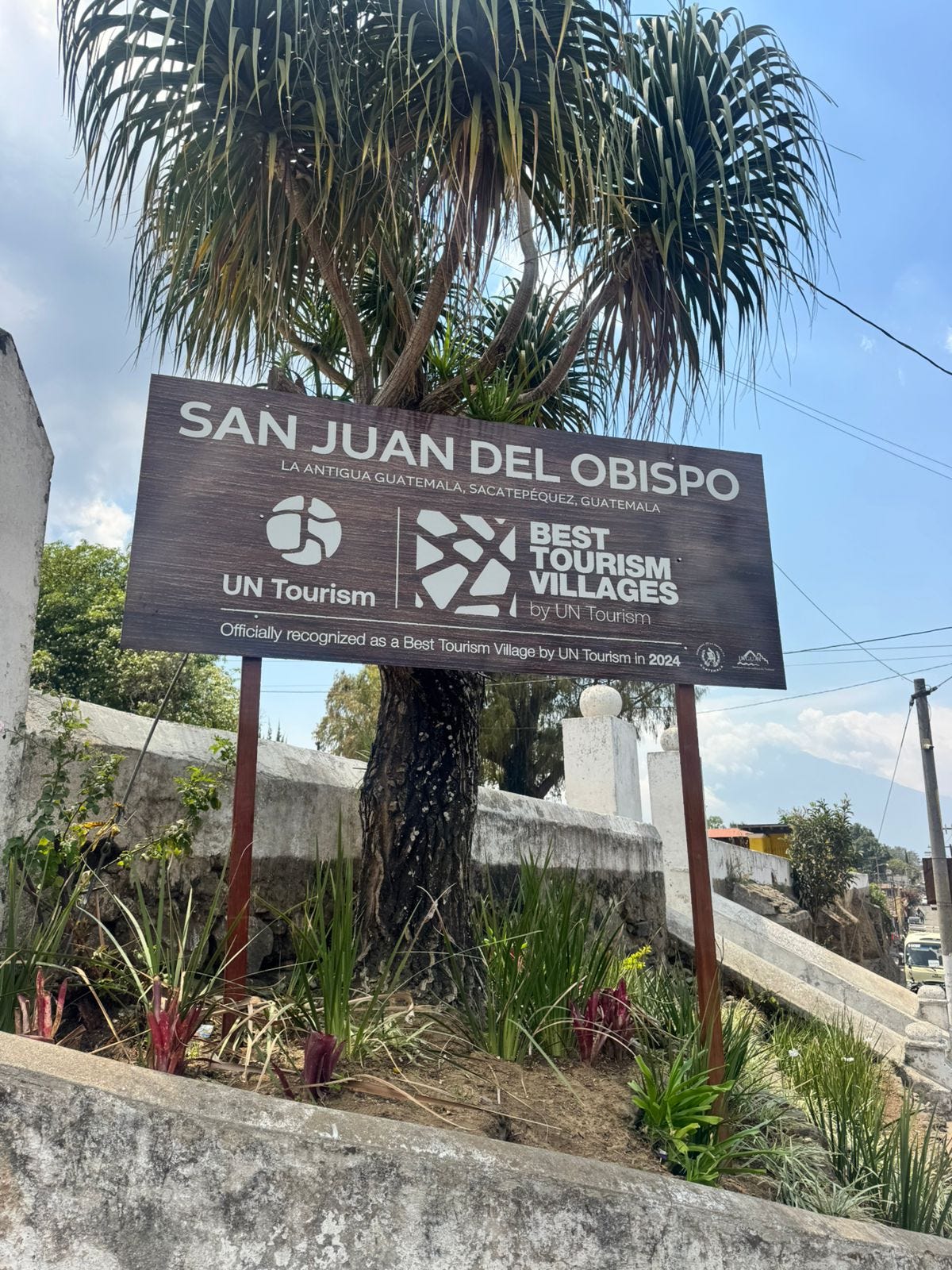
Next door, in a space that is actually just a narrow laneway leading to the owner’s front door, we found a Galería de Arte Botánico. The word botánica intrigued me, so we stepped inside. A gentle, smiling man welcomed us, and around him the walls were hung with t-shirts and trousers dyed entirely in natural pigments, genuinely beautiful things, fashionable and earthen in colour. This, I thought, is what a short skip outside Antigua delivers: already I’m feeling the presence of hand-crafted work and a way of life more attuned to the humble earth itself. San Juan de Obispo won a UN Best Tourism Village award in 2024, and despite it’s rugged, beat up appearance in many places you can feel something unique in its unpolished or curated character. I always enjoy this unself-conscious pride of people making things carefully and being genuinely glad when a stranger notices.
We hopped across the road to a little shop selling rustic handmade clay pots and ornaments. The owner was delighted to see us. I bought a copalero, a small clay vessel used for burning copal incense, itself one of the oldest continuous ritual practices in Mesoamerica. The smoke of the copal tree offered to the gods long before a church was ever built here. Then we sat in the middle of the shop eating a Q10 cup of iced nispero, which is about as close to the right thing to do in a moment as I can imagine.
Back at the Garden of Eden, I met the owner only briefly, a small, diminutive man with a genuine smile and an efficient, busy air about him. We met only in passing, a quick exchange, not much more. He climbed up onto the fountain and filled the upper basin with water, before spraying vinegar on it and wiping down the ceramic surfaces. I imagined him in the highland mountains lecturing peasants on guerrilla warfare and Marxist idealism. Or perhaps he is more the academic type, eloquently elucidating the cause of the indigenous campesinos. Possibly neither, but I like that the mystery still lingers about the place. This garden filled me with more questions than I could answer. I didn’t ask him for more. Some things are better left as the questions they are.
In the morning I will pack up, shoulder my bag, and walk back towards Antigua for one last jaunt. The marching band will have long since passed. Whatever they were celebrating, or mourning, or declaring, they will be gone and the city will be getting on with its complicated, layered, unresolved life, the same as it always has.
This is my fifth consecutive winter in Guatemala, and in the morning I leave for New York and then Ireland, back to the grey and rolling Atlantic ocean washing up on south Cork, back to the familiar, back to home. And yet something in me is already reluctant.
Guatemala does that to you. It gives you a jaguar, a nativity, a revolutionary, and a garden named after the beginning of everything and it lets you sit with all of it, the contradiction, and the conversation of all those elements.
I keep coming back because of those contradictions. Because nowhere I have travelled holds so much beauty and so much sorrow in the same place. Because the Maya are still here, still weaving, still burning copal, still negotiating five centuries of pressure with extraordinary resilience.
My hope, leaving, is simple: that they are given the space to flourish. That the old ways are not merely preserved as curiosity or spectacle, but allowed to live and breathe and adapt on their own terms. That the fountain, one day, issues water again.
I’ll be back next winter.
See you soon.